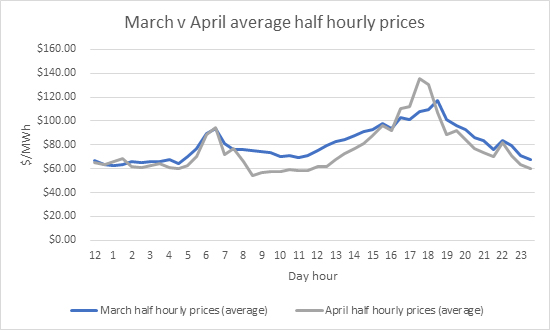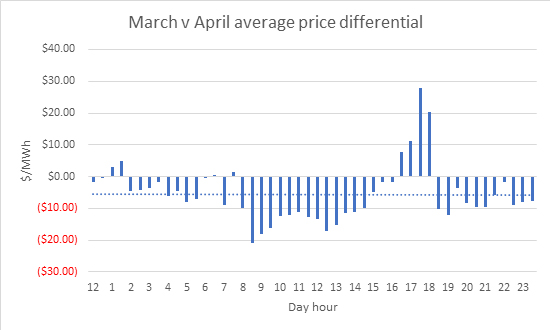

In Queensland, we have observed lower daytime spot prices since the beginning of April, relative to March averages.
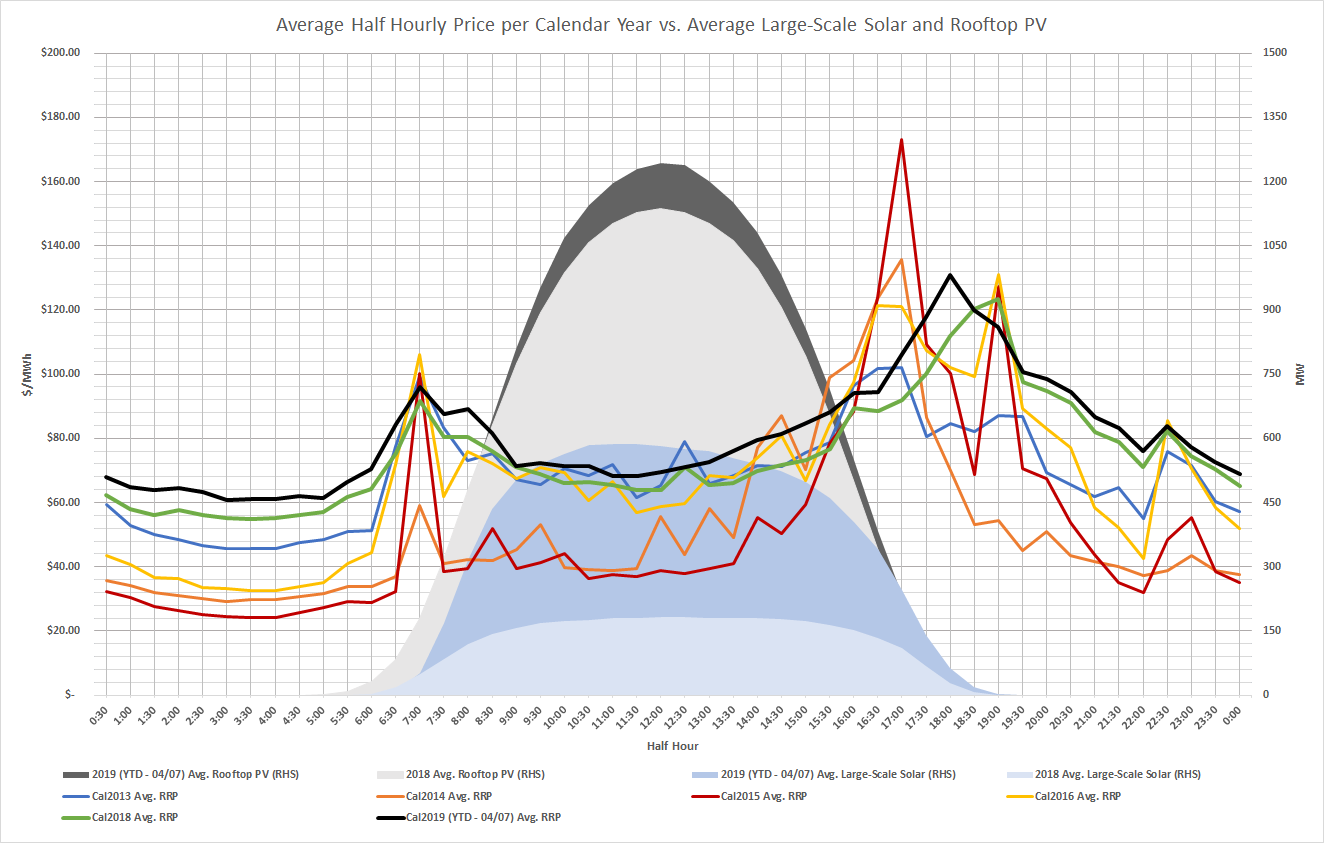
Taking a closer look at half hourly average spot prices seen so far in April, we can see that between 8am and 4pm spot prices have been softer than the same periods in March. Following this, spot prices are higher in the evening peak periods. Whilst it is a very small data set, this is the relationship that many in the market expect to evolve.
Softer spot prices in the day will motivate generators to
price more aggressively (price higher) in the evening peak to increase earnings
which have been lost during the day.
Should we see this evolution of softer spot prices during the sunlight hours of the day, it will put further strain on the Queensland solar industry which has had several setbacks of late.
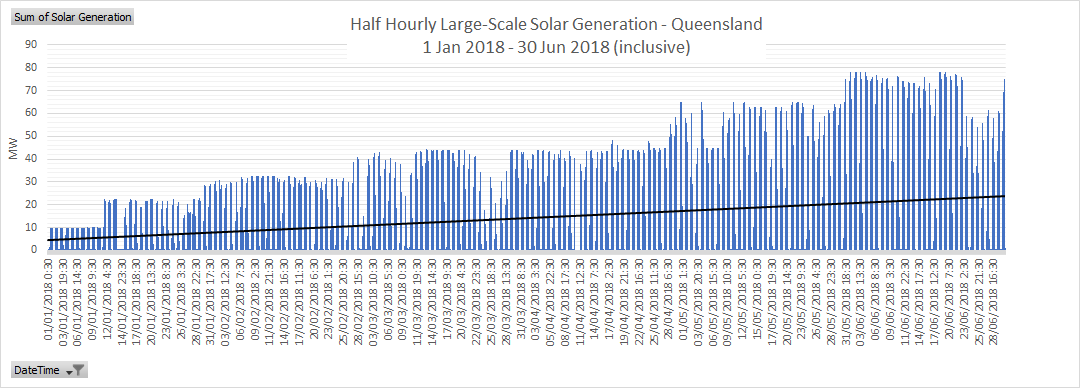
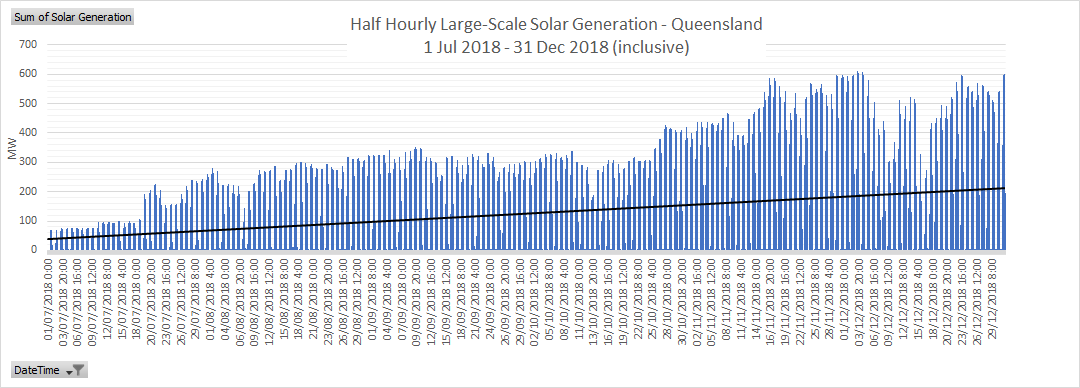
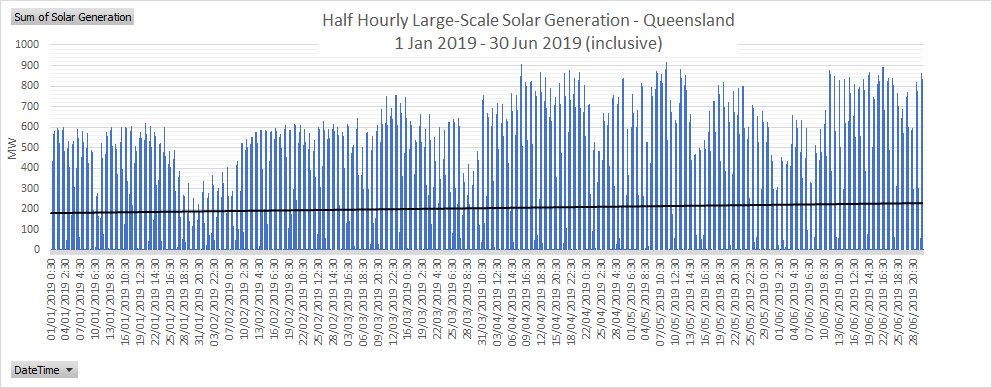
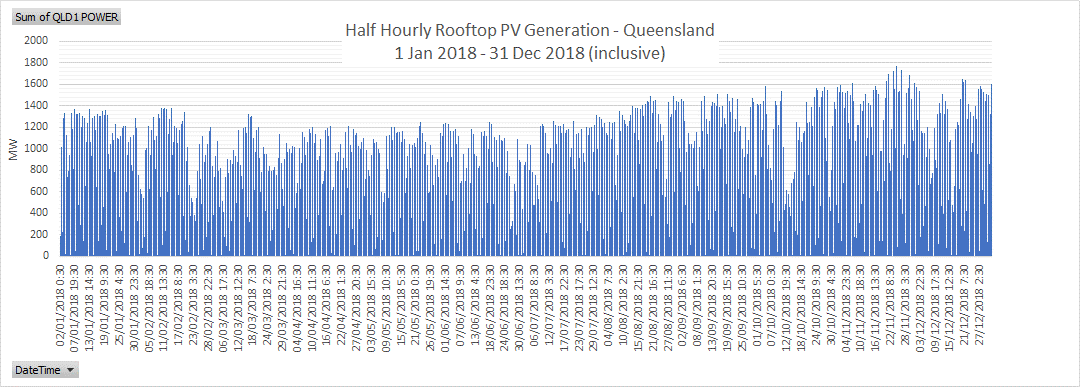
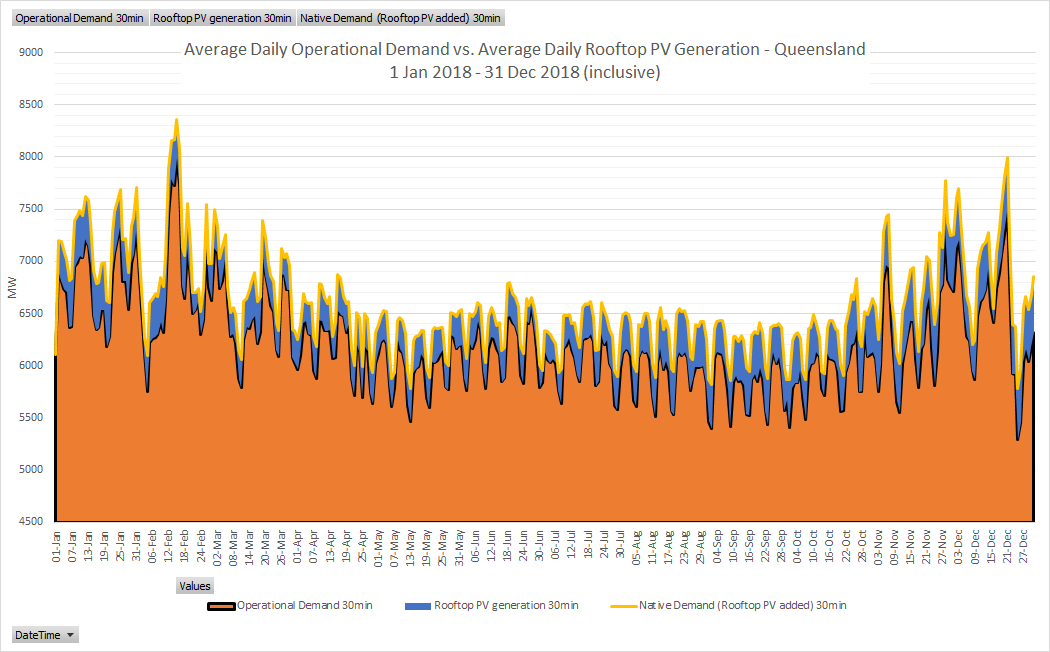
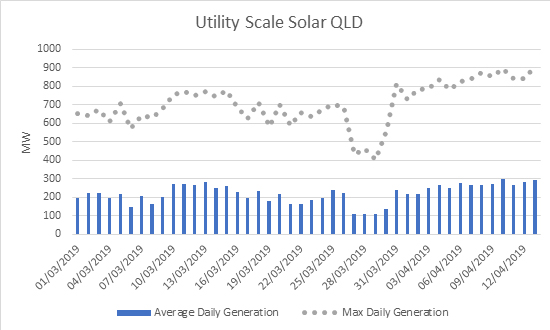
In addition, we can observe from the below graph that there has been an increase in generation from utility scale solar, in terms of both peak and average generation. The increase in solar is making more low-cost generation available in Queensland. New generation from these solar plants remains insufficient to meet all demand and therefore, solar is not setting prices.
If you have any questions regarding spot prices or any other matter relating to energy, please contact Edge Energy Services on 07 3905 9220 or 1800 334 336.
Alex Driscoll, Manager Wholesale Clients and Markets
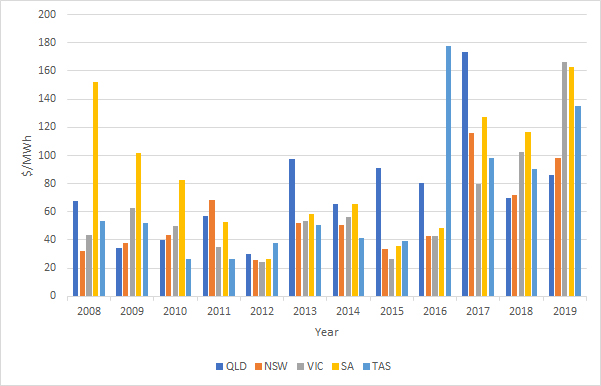
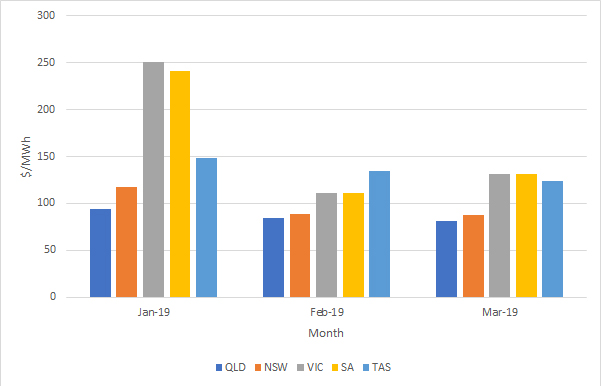
The electricity spot prices were higher for the Summer period (January – March) compared to the preceding three months. Although demand remained static, prices increased as a result of coal and gas generation setting prices at elevated levels. Average prices increased in all regions from the previous summer, with Queensland increasing the least at 23% and Victoria increasing the most at 62%.
Across all regions, prices during the 2019 summer were higher than the 2018 summer and were very high in a historical context for Victoria, South Australia and Tasmania. Looking back across the last 10 summers, 2019 summer prices are at their highest levels in most states.
Figure 1: Historical prices for summer
It should be noted that prices in both 2012 and 2013 were affected by a carbon tax, which was subsequently repealed in 2014. Since then, there has been a steady price increase in all mainland NEM regions. In Queensland, the Government provided a direction to Stanwell Corporation and CS Energy to adopt strategies to reduce wholesale prices. Since the direction, there have been fewer price spikes (prices above $300/MWh), although average prices have continued to increase.
Price spikes in late January for NSW, South Australia and Victoria were driven by a combination of the following factors:
the lack of wind generation;
reduced limits on interconnectors;
reduced thermal generation output; and
hot weather increasing demand.
High temperatures also increased demand for Queensland in mid-February, pushing demand to 9,988MW.
The New South Wales market was relatively stable over summer with limited volatility. Throughout the season, prices only spiked above $500/MWh for the trading interval on 2 occasions. Snowy Hydro continues to draw down its dam levels to cover cap contracts and supress prices below $300/MWh.
Quarter 1 2019 saw a lower level of generation for gas powered generators as a result of the increased level of generation from renewables and the rising cost of fuel. Renewable generation continues to grow to over 3GW from the start of the year. Operational demand dropped to its lowest level since 2002 as a result of a reduction in energy intensive industries and the increased uptake in rooftop solar PV.
Figure 2: Average monthly spot prices in the NEM
Coal fired generation was at its lowest level since the start of the market on 13 December 1998. This lower level of generation was driven by prolonged outages at Yallourn and Loy Yang A and the increase in market share from renewables. Coal fired generation was also impacted by an increased number of trips, increasing from 10 in the previous quarter to close to 30 in Q119.
Hydro generation was reduced driven by lower dam levels or water conservation strategies by Snowy Hydro in New South Wales and Victoria, and Hydro Tasmania in Tasmania.
Looking forward
Higher spot prices and concerns over the stability of the grid have caused the forward curve to increase. Snowy Hydro continue to draw down on its dam reserves and with a dry outlook, the inflows could be lower than previous years. If Snowy Hydro reduce output during 2019, spot prices could be even higher than current prices.
There is currently a huge pipeline of committed projects waiting to enter the market. These projects are mainly renewable energy, diesel and batteries. The integration of renewable energy generation into the market and the strategies of price setting coal and gas generation will determine if prices will reduce or if a more volatile market will be created. It is unlikely in the near term that spot prices will return to historical levels as renewable generation has not reached the volume required to consistently set prices at lower levels.
If you would like to discuss the electricity market outlook and potential impact to your electricity portfolio, please contact our Manager Wholesale Clients and Markets, Alex Driscoll on 07 3905 9220.
On 12 March 2019, the Clean Energy Regulator (CER) has confirmed the 2019 renewable power percentage (RPP) and small-scale technology percentage (STP) has been set by legislative amendment.
The 2019 RRP has been set at 18.6% and the 2019 STP has been set at 21.73%.
As explained by the CER, the RRP and STP set the annual statutory demand for large-scale generation certificates and small-scale technology certificates in the Renewable Energy Target.
If you have any questions regarding the 2019 RRP or STP or any other matter relating to energy, please contact Edge Energy Services on 07 3905 9220 or 1800 334 336.
The Australian Energy Market Operator (AEMO) released its draft marginal loss factors (MLFs) today. As generally expected, solar and wind farms that are a long distance from the regional reference point have been hurt.
The most notable example of this is the Broken Hill solar farm, which has a draft MLF for FY20 of 0.7254. This is 0.2535 below the current MLF. If the draft MLF is confirmed in the final report (due 1 April 2019), this will reduce the volume of electricity sold by the solar farm by 25%.
A number of other solar and wind farms had material reductions in MLF and are facing a challenging situation. Most notably, Silverton Wind Farm (NSW), Karadoc Solar Farm (VIC), Griffith Solar Farm (NSW) and Parkes Solar Farm (NSW).
MLFs are very difficult to estimate, which is reflected in the relatively large change we are observing year on year. Amongst many other concerns, this creates uncertainty for the investment community.
If you have any questions regarding the draft MLFs or any other matter relating to energy, please contact Edge Energy Services on 07 3905 9220 or 1800 334 336.
With expectations that CleanCo will be trading in the NEM by mid this year, things are getting into full swing. Last week CleanCo appointed its first two key executives – Miles George and Geoff Dutaillis.
Who are these new executives?
Miles George has been appointed the Interim Chief Executive Officer (CEO) at CleanCo. His role at CleanCo is to secure cleaner, more affordable, sustainable energy and secure supply of electricity for Queensland (QLD). He was previously the CEO and Managing Director of Infigen Energy. After leaving Infigen Energy in 2016, Miles continued as a strategic adviser until December 2017. During and after his time at Infigen, Miles has been the Chairman of the Clean Energy Council, a representative on the AEMC Reliability panel, an Expert panel member for AEMO and Director of the Australian Conservation Foundation.
Geoff Dutaillis has been appointed the General Manager of Transition. Geoff was most recently the CEO (Australia) of Wind Energy Holdings, a leading renewable energy company based in Thailand. The company has interest in various Australian wind farms. Geoff has also held executive positions at Infigen Energy as Chief Operating Officer (COO) from 2009 until 2013 and Lendlease more recently as Head of Sustainability.
What is the mandate for CleanCo?
CleanCo has the mandate to increase competition in the electricity market at peak times of demand when prices are generally at their highest. CleanCo is expected to transform intermittent renewable generation into firm financial products for customers and retailers while backing QLD’s renewable energy and low emissions generators.
Which of the existing generators are to be transferred from the current government owned corporations; Stanwell and CS Energy?
Initially, CleanCo’s portfolio will include a range of existing renewable and low emission energy generation assets including:
Wivenhoe pump storage hydro plant,
Swanbank E gas-fired power station, and
Barron Gorge, Kareeya and Koombooloomba hydro power stations.
If you have any questions regarding CleanCo or any other matter relating to energy, please contact Edge Energy Services on 07 3905 9220 or 1800 334 336.
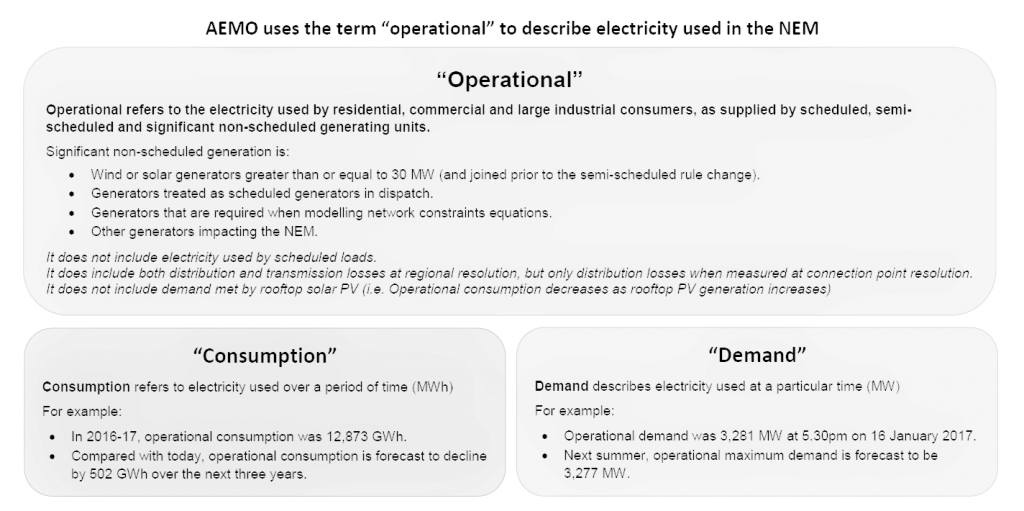
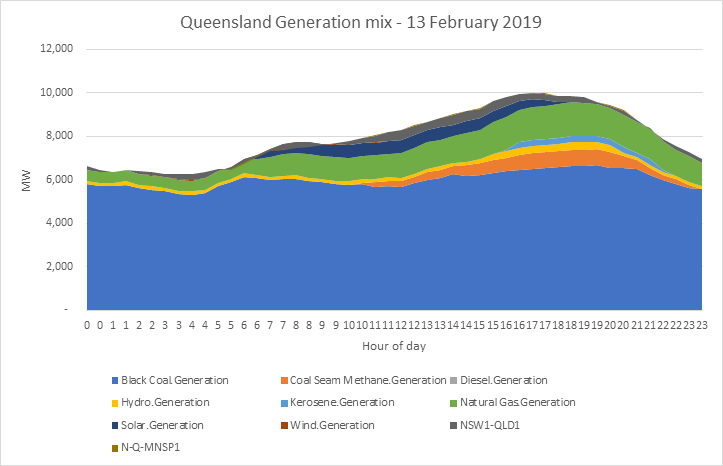
Queensland (QLD) operational demand (see definition in image below) reached a new all-time record of 10,052 MW at 4.55pm yesterday (13th February 2019) largely as a result of temperature driven demand. Despite record demand, spot prices remained steady with QLD generators ramping up generation and conservative bidding from key generators.
Image sourced from AEMO
In terms of what type of generation was keeping the lights on, black coal and gas were the two largest contributing fuel sources (as shown in the image below). At the time of peak demand, 6,458 MW of generation was coming from coal and 2,253 MW from gas (natural gas and coal seam gas).
Should demand have crept even higher, Wivenhoe pumped storage
hydro still had capacity to ramp up generation to maintain stable pricing.
If you have any questions regarding this article, please contact Edge Energy Services on 07 3905 9227.
Edge Energy Services recently published an article on the 16th of January outlining what happens in the market when high prices and a lack of reserves are published in pre-dispatch. On the 24th January, it was a different story, where extreme temperatures and high demand in South Australia (SA) lead to load shedding, activation of RERT and operation of the emergency generators in SA. This resulted in the maximum price reaching $14,500/MWh with an average of $3,388/MW.
At the start of the week the Bureau of Meteorology forecast high temperatures across SA and Victoria (VIC) for the coming week. On the morning of the 23rd January, AEMO flagged extreme temperatures for SA and VIC and requested participants to update generation levels inline with expected conditions.
High temperatures and humidity have significant impacts on:
Performance of gas-powered generation and;
Energy usage of end users resulting in high demand levels.
In addition to extreme temperatures driving high demand, the loss of a Loy Yang A unit earlier in the week due to a tube leak. The reserve levels within VIC then fell to a point where LOR3 (Lack of Reserve 3) was activated. When LOR3 is activated, load shedding occurs.
At 15:00 an IRPM (Instantaneous Reserve Plant Margin) of 8% for the SA and VIC economic island was calculated. This indicated there was only 881MW of spare capacity in the islanded region. This information formed part of a report published by Global-Roam.
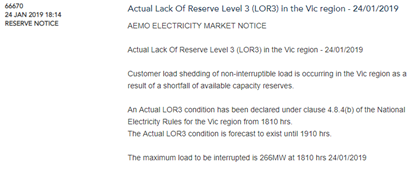
At 16:14 AEMO published a market notice stating a LOR3 had occurred and load shedding had commenced at 16:10. Changes in demand indicated 266MW of load was shed. The supply / demand balance changed during the day and reached levels where the LOR3 could be cancelled at 20:00.
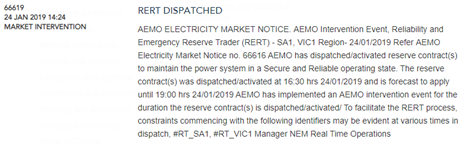
Prior to load shedding, AEMO activated RERT (Reliability and Emergency Reserve Trader) at 14:24 which involves a combination of voluntary load shedding and demand side management. RERT was activated from 16:30 until 19:00.
During high price periods, most generators were operating at close to maximum capacity. The SA Emergency generators also ran between 17:00 and 21:15 adding 200MW to the grid. This volume assisted VIC via the interconnector flows. Wind resources were low in VIC and neighbouring regions, resulting in less than expected generation
The constraint N^^V_NIL_1, which effects the limit of capability through the NSW-VIC interconnector also bound resulting in a limit of supply to the region from Queensland (QLD) and New South Wales (NSW).
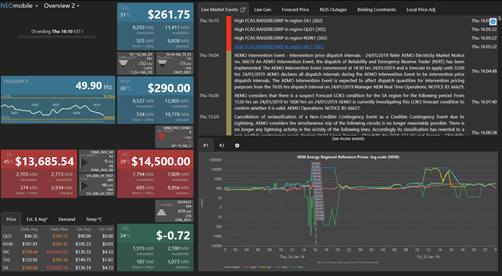
As a result of all the factors mentioned above, the spot price in VIC stayed at close to $14,500/MWh from 15:00 to 21:30. The diagram below highlights the resulting price, flows and regional prices for a 5 min interval of the day.
As a result of the high prices in VIC, the spot price for the quarter to date is currently $276.77/MWh compared with $119/MWh before Thursday.
Current contract prices for VIC are around $140/MWh for quarter 1 of 2019. Given these higher prices, users with existing exposure to the spot price would have been significantly better off if they were highly contracted. End users with the ability to change their exposure via demand side management would also have benefited from reducing demand.
As a result of the volatility yesterday the administrative price cap has been activated from 11:30am today. This will apply until prices decline below the price administered threshold.
If you have any questions regarding this article or the electricity market in general, call Edge on 07 3905 9220 or 1800 334 336.
At the end of the last week, AEMO flagged the possibility of extreme temperatures for the following week in South Australia, Victoria and New South Wales.
Weather forecasts were showing a large uncertainty in the predicted temperatures. Predictions ranged from mid to high 30s for Victoria, low to mid 40s for South Australia and high 30s for New South Wales. The key risk in these forecasts was the possibility of temperatures exceeding 40 degrees in two or more regions simultaneously.
On 11 January, AEMO published a market notice highlighting the forecast extreme temperatures in South Australia and elevated temperatures in Victoria and New South Wales. In this notice, AEMO provided forecast temperatures and generation capacity reference temperatures for generators to consider when updating their generation levels. Temperature and humidity have significant impacts on the performance of coal and gas powered generation.
On the back of this, AEMO updated its demand forecast and the resulting higher demand caused a lack of reserve to be triggered. The lack of reserve was forecast between 15:00 and 18:00 on 15 January. AEMO requested a market response from generators to make generation available to fulfil the shortfall.
Between 11 January and 15 January AEMO published further market notices updating the expected lack of reserve for 15 January and requested further generation response.
Pre-dispatch prices and demand for 15 January were published by AEMO the day prior. Spot prices were forecast to reach $14,500/MWh based on a demand of 8,800MW, which is significantly higher than normal levels.
As the afternoon approached, temperatures were high but a cool change was also approaching.
At 11:57 on 15 January, AEMO issued a market notice cancelling the lack of reserve.
As a result of the increased availability of generators and the cool change, AEMO revised their demand forecast down 800MWs. The resultant shift in supply and demand drove forecast prices down from $14,500 /MWh to $300/MWh.
Contract market prices are influenced by the outcomes of the spot market. As a result of the forecast high prices in South Australia,Victoria and New South Wales, the contract market prices increased in the build-up to 15 January; however, as the forecast spot prices and actual spot prices reduced, the contract market also reduced.
Retailers and large industrials are provided cover from the volatility of the spot market by purchasing contracts at a fixed price. However, the impact of the spot market can influence when volume is purchased to achieve the desired outcome for a business.
If you have any questions regarding this article or the electricity market in general, call Edge on 07 3905 9220 or 1800 334 336.
The COAG Energy Council met today for their 21st meeting. On the agenda was AEMO addressing their work in preparing the grid for summer, bringing down electricity costs and ensuring long term grid reliability and security.
AEMO highlighted the priority of work being undertaken to ensure that there is enough dispatchable generation in the NEM and integration of renewable and distributed energy resources. The Ministers agreed to a work program for the ESB to develop advice on a long term, fit for purpose market framework to support reliability that could apply from the mid-2020s. There was very little detail on this framework, however Edge will look to discover more.
Reliability
Ministers agreed to the final draft bill which gives effect to the Retail Reliability Obligation. The final package of rules will be brought to Council for approval in the first half of 2019, with a target commencement date of 1 July 2019.
Transmission upgrades
Ministers agreed on an approach to deliver the Group 1 transmission network projects. Group 1 projects include:
• Increasing transfer capacity between New South Wales, Queensland, and Victoria by 170-460 MW;
• Reducing congestion for existing and committed renewable energy developments in western and north-western Victoria; and
• Remedy system strength in South Australia.
In the Base plan, these initial transmission developments for Group 1 are costed at between $450 million and $650 million, and the assets will continue to benefit consumers well beyond the 20-year ISP forecast period. More cost benefit analysis work is to be conducted on Group 2 and 3 projects.
If you have any questions regarding this article or the electricity market in general, call Edge on 07 3905 9220 or 1800 334 336.
RCR Tomlinson entering voluntary administration this week has been a major eye-opener in the renewable energy world. The engineering firm had shown signs of stress earlier in the year, particularly when it was forced to record a $57 million write-down on the value of it’s Daydream and Hayman solar farms in Queensland. Following this, the company successfully went to market and raised an additional $100 million in capital. Now after incurring liquidated damages as a result of running late on solar projects, directors had no choice but to put the company into administration.
In the renewable energy space, these events particularly emphasise the potential risk of entering into a PPA with a project that requires development prior to receiving any MWh. For those considering entering into a renewable PPA, it is imperative to be mindful of the gravity of the project risk taken with these developments. With increasingly stringent connection criteria being enforced by AEMO and transmission companies, corporate PPA off-takers need to consider the structuring of risk in the PPA to avoid being exposed in situations like this.
There are several ways to manage project risk through legal and commercial arrangements. Without being privy to the details of RCR Tomlinson’s contracts, it would appear that the company was wearing “connection to the grid” risk. On face value, this would have felt like a win to the off-taker. However, the off-takers are now in a position where the risk has fallen onto them due the collapse of the company. Whilst RCR Tomlinson shouldn’t have taken that risk, the PPA counterparties arguably also should not have turned a blind eye to the potential project risk.
This is an important lesson for any corporate entity looking to enter into a PPA, by understanding whether your developer and construction partners have the appropriate means to manage the risk that is placed on them. Having liquidated damages in a contract is essential. However, be mindful that at the end of the day, if a company is placed into administration and subsequently liquidated, liquidated damages are worthless.