
STATE OF THE ELECTRICITY MARKET – AUTUMN MARKET OVERVIEW

Alex Driscoll, Manager Wholesale Clients and Markets

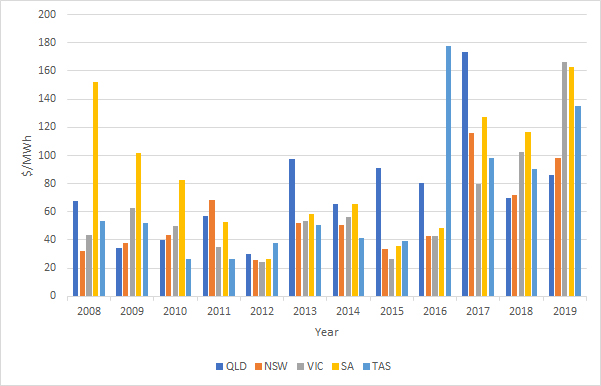
The electricity spot prices in Q219 (April to June) were unsurprisingly lower than the preceding 3 months of Q119 (January to March). Although Q219 experienced some volatility, this was far from the extremes we saw in Q119 with VIC and SA hitting the market price cap in February.

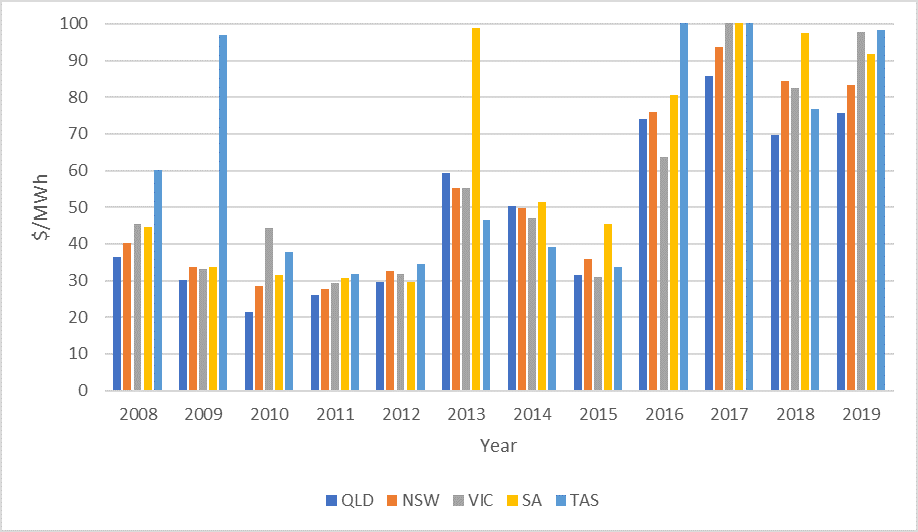
Prices during Q219 were higher than Q218 in QLD, VIC and TAS, however lower in NSW and SA. Looking back across the last 10 years, prices have been higher for all regions.


Figure 1: Historical prices for autumn
(Source: AEMO)

It should be noted that prices in both 2012 and 2013 were affected by a carbon tax, which was subsequently repealed in 2014. Since 2015 there has been a steady price increase in all mainland NEM regions. In Queensland, the Government provided a direction to Stanwell Corporation and CS Energy to adopt strategies to reduce wholesale prices. Since the direction, there have been fewer price spikes (prices above $300/MWh), although average prices have continued to increase.

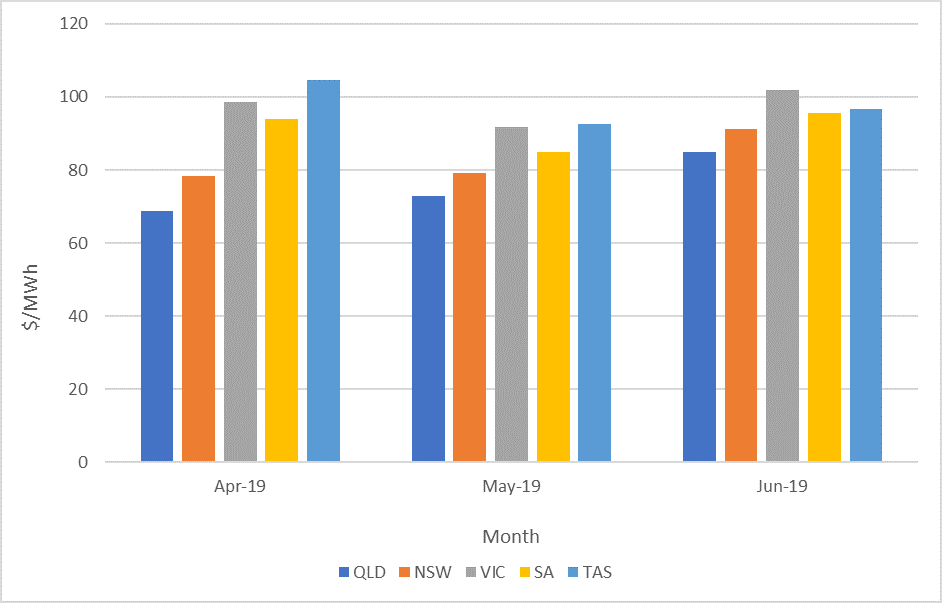
Spot prices and volatility were low during the first part of Q219 as a result of high availability, low demand and generators bidding volume in low price bands.  By the end of May, peak daily price increased as a result of operational demand increasing. This stems from rooftop PV rolling off and increased use of household appliances. Spot prices continued to increase through June as both rooftop PV and commercial solar were impacted by shorter daylight hours and intra-regional constraints. NSW price increases were primarily driven by demand increases attributed to colder temperatures.

Snowy Hydro continues to draw down its dam levels to cover cap contracts and supress prices below $300/MWh.

Q219 saw an increased level of generation from gas powered generators. Renewable generation increased by 66% to over 3GW from the start of the year. Operational demand continues to drop as a result of a reduction in energy intensive industries, energy efficiency and the increased uptake in rooftop PV.

Figure 2: Average monthly spot prices in the NEM
(Source: AEMO)

The Market Operator issued various directions to participants in SA during Q219 to maintain the power system in a secure operating state. Synchronous generating units were directed to operate or remain synchronised to maintain power system security.

Coal fired generation continued to reduce, with the lower level of generation driven by unit outages and the increase in market share from renewables. Hydro generation consistently increased over Q219 despite low dam levels in NSW, VIC and TAS. Increased generation from wind also continued over the quarter.

Higher spot prices and concerns over the stability of the grid have caused the forward curve to increase. Snowy Hydro continued to draw down on its dam reserves and with a dry outlook, the inflows could be lower than previous years

Looking forward

Figure 3: Calendar year 2020 forward contracts 

$/MWh NSW QLD SA VIC
04-July-19 83.72 73.00 97.00 101.00

(Source: ASX)

There is currently a large pipeline of committed projects waiting to enter the market. These projects are mainly renewable energy, diesel and batteries. Recent updates to the MLFs may reduce this pipeline. The integration of renewable energy generation into the market and the strategies of price setting coal and gas generation will determine if prices will reduce or if a more volatile market will be created. It is unlikely in the near term that spot prices will return to historical levels as renewable generation has not reached a level to consistently set prices at lower levels.

If you would like to discuss the electricity market outlook and potential impact to your electricity portfolio, please contact our Manager Wholesale Clients and Markets, Alex Driscoll on 07 3905 9220.

High solar generation vs spot prices in Queensland

Alex Driscoll, Manager Wholesale Clients and Markets

Solar generation and its impact on spot price is a topic of major discussion, particularly in the ‘Sunshine State’ of Queensland where there is a continuous pipeline of solar generation development. This raises the question: is strong solar generation having an impact on spot prices, and if so, is it lowering or increasing prices?

Increasing Large-scale Solar Penetration in the NEM

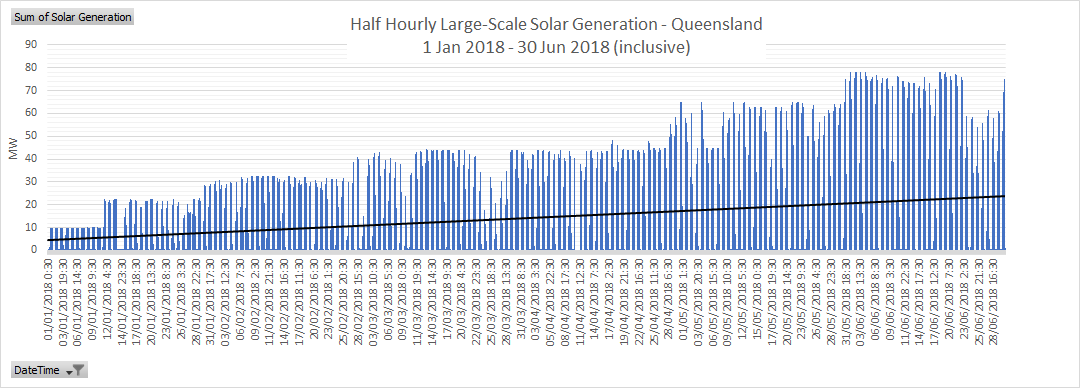
It is no secret that solar generation has increased dramatically over the last 12-18 months. From 1 January 2018 to 30 June 2018 (inclusive) the average daily production of large-scale solar generation in Queensland was only approximately 14.2 MW, only accounting for 0.085% of total Queensland generation.

(Source: AEMO)

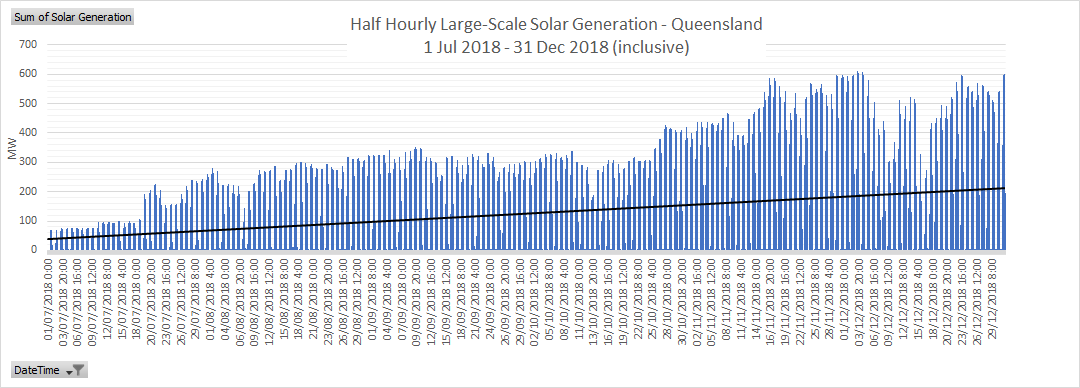
For the six months between 1 July 2018 to 31 December 2018 (inclusive), the average daily production of large-scale solar generation in Queensland increased to 125.3 MW and accounted for 1.9% (an increase of > 1% on the previous 6 months) of total Queensland generation during that period.

(Source: AEMO)

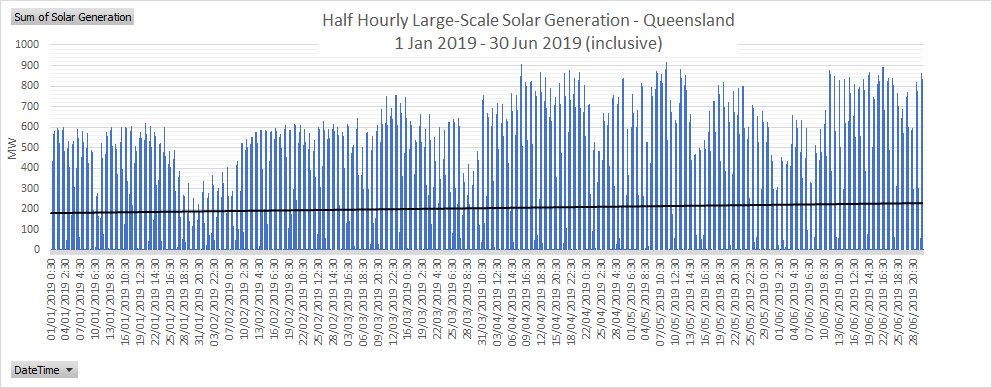
Fast forward to 2019, and generation volumes from large-scale solar generators has continued to increase, reaching a maximum of 917 MW on 08/05/2019 at 11:30. From 1 January 2019 to 30 June 2019 (inclusive) the average daily production of large-scale solar generation in Queensland increased to 205.6 MW and accounted for 3% (an increase of an additional 1% on the previous 6 months) of total Queensland generation.

(Source: AEMO)

The Rooftop (Photovoltaic) Reckoning

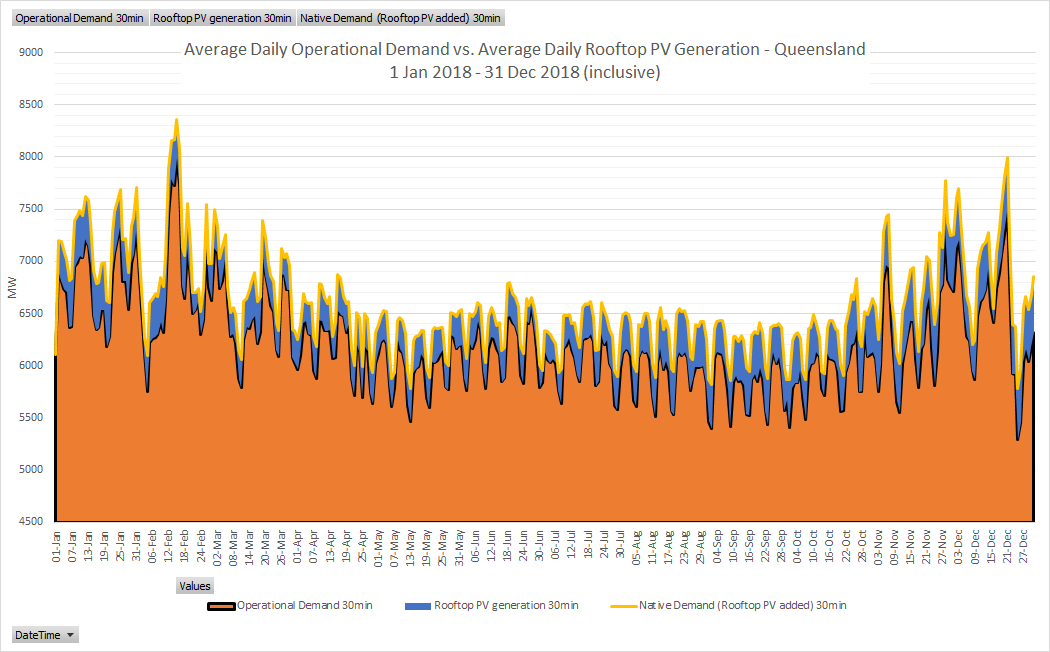
So far, we have only evaluated large-scale generation and its penetration in Queensland, however there is another solar photovoltaic beast infiltrating the NEM, namely Rooftop PV (small-scale home and business installations). If we look at similar timelines, home and business owners are deciding to take more control of where their energy comes from, with multiple household and business rooftops opting to install solar panels on what would be wasted space (and opportunity). It is important to understand, rooftop PV falls within AEMO’s (Australian Energy Market Operator) category of distributed energy resources which is subtracted from native demand to determine operational demand.

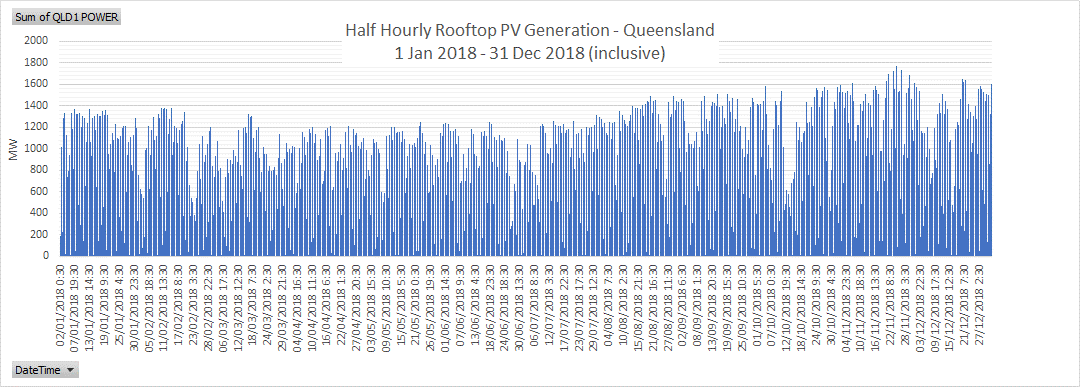
The general trend for rooftop PV is that its contribution to the energy mix is growing constantly. The maximum volume between 1 January 2018 to 30 June 2018 (inclusive) reached 1.4 GW, with the period 1 July 2018 to 31 December 2018 (inclusive) recording a maximum of 1.78 GW. That is an increase of almost 400 MW in six months. On average, rooftop PV reduced native Queensland demand by 345 MW each day on 30-minute demand figures across the entire 2018 Calendar Year.

(Source: AEMO)

(Source: AEMO)

Roughly year-to-date, we have not seen the same strong performance from rooftop PV. However, summer 2020 could provide a new rooftop PV maximum for Queensland and NEM wide with the Australian Photovoltaic Institute recording on average for the period of 1 January 2019 to 31 March 2019 (inclusive), an additional 16,200 reported installations.

(Australian PV Institute Solar Map, funded by the Australian Renewable Energy Agency, accessed from pv-map.apvi.org.au on 4 July 2019)

Impact to Spot Price

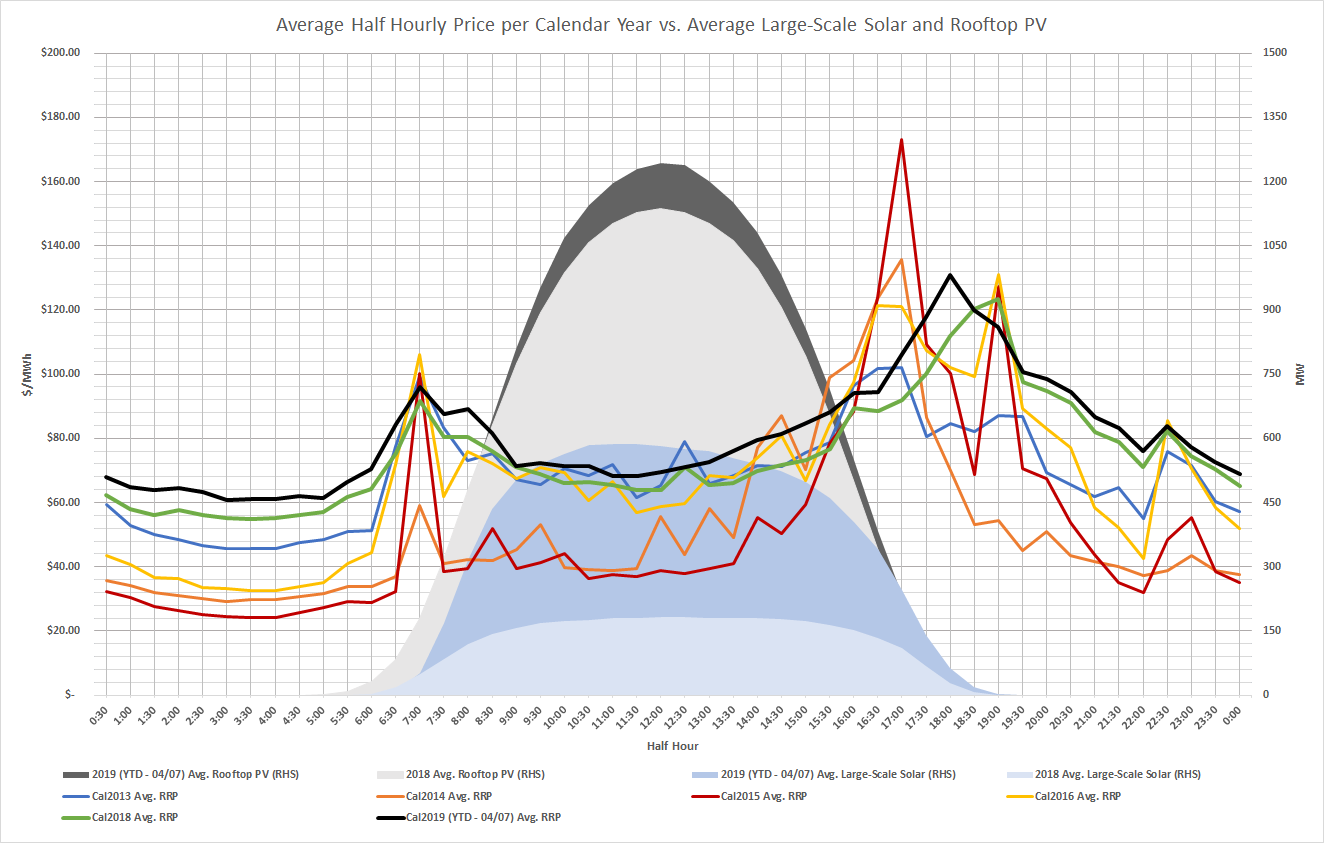
As the graph below depicts the calendar year, daily average half hourly pricing from 2013 to YTD 2019 (excluding 2017 as an outlier with bidding direction from Queensland government to GOCs). Despite the growth and increase in both average (half-hourly) rooftop PV and large-scale solar generation, spot prices have also increased. This is not to say that solar is to blame for the increase in prices, as price has not increased in all hours of the day.

To summarise the changes:

  • The morning peak has remained roughly the same across the years with a sharper ramp-up depicted in earlier years.
  • Evening peak has shifted further into the evening than earlier years depicted and is not as strong.
  • The off-peak hours have become increasingly more valuable in comparison to earlier years.
  • However, the biggest and possibly strangest movement is the daylight hour prices, or solar hours have roughly remained the same (apart from 2014/15).

(Source: AEMO)

We cannot conclusively say that the increase in solar generation is the sole reason for prices heading on an upward trajectory since 2014 (as the table below depicts), however it would be fair to say the increase in solar has played a part in it. The addition of the strong solar penetration has changed the dynamic of the market, causing thermal generators and other fuel types to re-think how they will recover the costs of their 15, 20, 30-year investments. Thermal generators will likely start by displacing the price curve and increasing bids in the off-peak periods. The evidence is clear in that the off-peak periods are now increasingly more valuable than they were 3-6 years ago.

On top of this, a large portion of solar generation is being built north of the Calvale and Wurdong substations in Queensland and is having little effect (unless new infrastructure is built) on middle of the day spot prices. This is due to contingent and operational constraints placed on the power lines by AEMO so as to not overload the lines, forcing generation north of this constraint (solar inclusive) to constrain off. Nonetheless, there are a multitude of factors impacting the price in Queensland and solar generation’s impact on prices should not be overlooked. However, one thing is for certain, spot prices have been increasing since 2014 (see below table) and in the near term show little sign of slowing.

Calendar Year ($/MWh)
QLD 2013 2014 2015 2016 2018 2019 YTD
Avg Spot Price  $    68.41  $    50.91  $    51.96  $    67.32  $    74.82  $    80.64

(Source: AEMO)

If you would like further information on the impact of solar generation, please contact your Manager Wholesale Clients or Edge on (07) 3905 9220.

Supporting Angel Flight Australia

What is Angel Flight Australia?

Established in April 2003, Angel Flight Australia is a charity that coordinates non-emergency flights to assist country people to access specialist medical treatment that would otherwise be unavailable to them because of vast distance and high travel costs.

All flights are free and assist passengers travelling to or from medical facilities almost anywhere in Australia.

Who do they help?

Anyone who is medically and financially disadvantaged, being families who have been financially devastated by medical bills due to illness, accidents or other chronic conditions.

How does Edge support Angel Flight Australia?

For nearly two decades, Alex Driscoll, Manager Wholesale Clients and Markets, has been involved in 4WD adventures to show other participants parts of the country they would not normally be exposed to. Since 2005, Angel Flight Australia has been the recipient of the entry fee paid by each participant. Previous fundraiser adventures have been to Cape York, Simpson Desert, Victorian High Country and Central Australia.

Previous fundraising activities include the Stoney Creek Mini Music muster run over a weekend with music, food and activities, with all proceeds going to Angel Flight Australia.

For more information on how you can support Angel Flight Australia, please visit https://www.angelflight.org.au/.

STAFF PROFILE – Alex Driscoll

What is the best piece of advice you have ever received?

Your title isn’t only what you put on your business card; it is what you do with your position that counts.

Name a place you have never been to and would like to visit. Why?

Everest. It’s the highest place on earth so would be an amazing achievement to stand on the top.

Who or what inspires you?

Self-made successful people inspire me, being the likes of Richard Branson, Sid Kidman and Ranulph Fiennes. These people generally take risks to challenge themselves or create any opportunities.

What is one of the biggest challenges facing energy customers today?

The energy market is constantly changing with new technologies, pressure put on the network resulting from the changing energy mix and policy makers struggling to keep up with these changes. As a result, customers are challenged to make energy decisions with such a high level of change and uncertainty. Adding to this, new concepts are constantly entering the energy discussion and consumers are struggling to gain the knowledge to understand the topic and how it impacts them.

What does a typical day look like for you at Edge?

No day at Edge is ever the same for me. One moment I will be contract trading, the next moment I am modelling the forward curve, working on a new project or on the phone providing advice to clients.

STATE OF THE ELECTRICITY MARKET – SUMMER MARKET OVERVIEW

Alex Driscoll, Manager Wholesale Clients and Markets

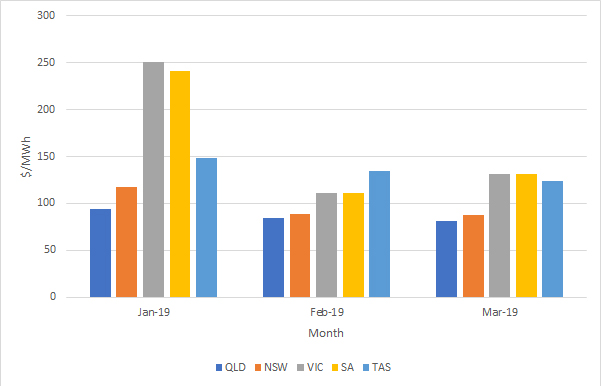
The electricity spot prices were higher for the Summer period (January – March) compared to the preceding three months. Although demand remained static, prices increased as a result of coal and gas generation setting prices at elevated levels. Average prices increased in all regions from the previous summer, with Queensland increasing the least at 23% and Victoria increasing the most at 62%.

Across all regions, prices during the 2019 summer were higher than the 2018 summer and were very high in a historical context for Victoria, South Australia and Tasmania. Looking back across the last 10 summers, 2019 summer prices are at their highest levels in most states.


Figure 1: Historical prices for summer

It should be noted that prices in both 2012 and 2013 were affected by a carbon tax, which was subsequently repealed in 2014. Since then, there has been a steady price increase in all mainland NEM regions. In Queensland, the Government provided a direction to Stanwell Corporation and CS Energy to adopt strategies to reduce wholesale prices. Since the direction, there have been fewer price spikes (prices above $300/MWh), although average prices have continued to increase.

Price spikes in late January for NSW, South Australia and Victoria were driven by a combination of the following factors:

  • the lack of wind generation;
  • reduced limits on interconnectors;
  • reduced thermal generation output; and
  • hot weather increasing demand.

High temperatures also increased demand for Queensland in mid-February, pushing demand to 9,988MW.

The New South Wales market was relatively stable over summer with limited volatility. Throughout the season, prices only spiked above $500/MWh for the trading interval on 2 occasions. Snowy Hydro continues to draw down its dam levels to cover cap contracts and supress prices below $300/MWh.

Quarter 1 2019 saw a lower level of generation for gas powered generators as a result of the increased level of generation from renewables and the rising cost of fuel. Renewable generation continues to grow to over 3GW from the start of the year. Operational demand dropped to its lowest level since 2002 as a result of a reduction in energy intensive industries and the increased uptake in rooftop solar PV.

Figure 2: Average monthly spot prices in the NEM

Coal fired generation was at its lowest level since the start of the market on 13 December 1998. This lower level of generation was driven by prolonged outages at Yallourn and Loy Yang A and the increase in market share from renewables. Coal fired generation was also impacted by an increased number of trips, increasing from 10 in the previous quarter to close to 30 in Q119.

Hydro generation was reduced driven by lower dam levels or water conservation strategies by Snowy Hydro in New South Wales and Victoria, and Hydro Tasmania in Tasmania.

Looking forward

Higher spot prices and concerns over the stability of the grid have caused the forward curve to increase. Snowy Hydro continue to draw down on its dam reserves and with a dry outlook, the inflows could be lower than previous years. If Snowy Hydro reduce output during 2019, spot prices could be even higher than current prices.

There is currently a huge pipeline of committed projects waiting to enter the market. These projects are mainly renewable energy, diesel and batteries. The integration of renewable energy generation into the market and the strategies of price setting coal and gas generation will determine if prices will reduce or if a more volatile market will be created. It is unlikely in the near term that spot prices will return to historical levels as renewable generation has not reached the volume required to consistently set prices at lower levels.

If you would like to discuss the electricity market outlook and potential impact to your electricity portfolio, please contact our Manager Wholesale Clients and Markets, Alex Driscoll on 07 3905 9220.
Accessing the STTM: Alternative gas supply

Stacey Vacher, Managing Director

Nick Clark, Energy Analyst

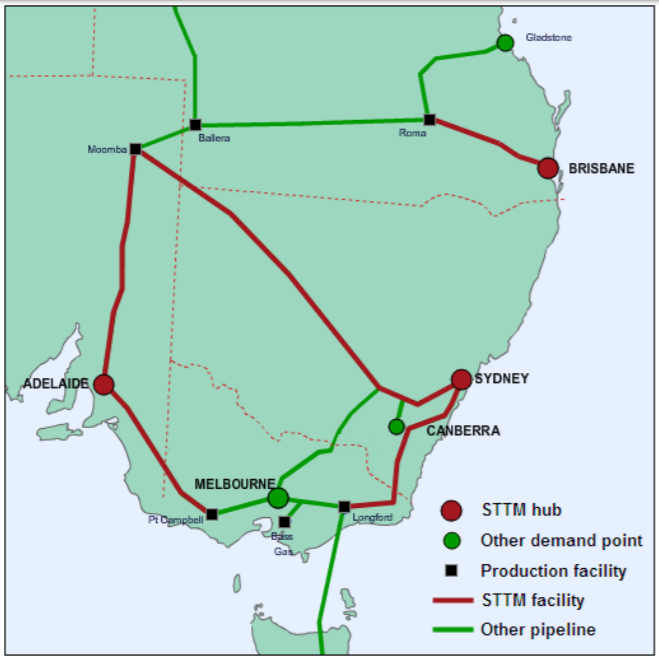
For a growing number of large energy consumers, consideration is turning to whether entering standard vanilla retail gas agreements deliver the most effective outcome. For consumers who are located within the bounds of the Sydney, Brisbane or Adelaide Short Term Trading Market (STTM) markets, many may not be aware that there is an alternative way to purchase gas. Below, we consider how the STTM works and what the benefits are of exploring this option.


What is the STTM

The STTM is essentially a market for the trading of natural gas at a wholesale level at defined hubs between pipelines and distribution systems. The STTM is a day-ahead gas market operated by the Australian Energy Market Operator (AEMO) with hubs located in Sydney, Adelaide and Brisbane. This means that gas is traded a day ahead of the actual gas day. The market settles daily with “shippers” delivering gas and “users” consuming gas. An organisation may sell gas as a shipper and purchase gas as a user through the same STTM, however, it would do so at the daily market price.

Source: “Overview of the STTM for Natural Gas”, AEMO, page 1

Market participants are incentivised to ship and consume volumes of gas nominated through a pricing mechanism, which aims to keep the gas supply system balanced. Organisations are able to sell excess gas to its requirements on the open market the next day, as well as bid to purchase extra gas as and when required. This system allows participants more flexibility and choice in purchasing gas supplies. Furthermore, the STTM’s price transparency ensures that the price set by the market daily truly reflects the current supply and demand situation.

Each of the STTM hub settles independently of the other, however each hub operates under the same rules outlined by AEMO.

For further operational details of the STTM, AEMO has provided an “Overview of the STTM for Natural Gas” (Link: https://www.aemo.com.au/media/Files/Other/STTM/1130-0679%20pdf.pdf).

Benefits of participating in the STTM

There are a range of drivers for some large gas consumers transitioning to purchasing and selling gas in the STTM. The main reasons are:

  • The STTM is an historically lower commodity cost;
  • Consumers can manage or avoid penalties under daily, monthly, and / or annual take or pay positions;
  • There is increased flexibility for both sellers and consumers; and
  • There are no long-term commitments.

These benefits can materially lower the cost of consuming gas. Depending on the nature of the organisation, there are a range of structures to access an STTM. Each structure requires varying levels of engagement from the consumer.

Engagement with Edge

To assist in transitioning your organisation to accessing the STTM, Edge are able to offer the following services:

  • Daily nominations and trading;
  • Monthly reconciliation;
  • Facilitation of short and long-term Gas Supply Agreements; and
  • Managing the STTM application.

Entering the STTM market is strategic decision for most organisations and can take anywhere between 3-12 months to transition. If you would like to know more, please contact us to understand if accessing the STTM market is the right decision for your organisation.

We note that there are also alternatives for consumers who are not within the STTM limits, however these options are not discussed for the purposes of this article. If you would like further information on your options, please contact your Manager Wholesale Clients or Edge on (07) 3905 9220.

Gas Market Update

Nick Clark, Edge Energy Analyst

Capacity Trading

As of 1 March, the new Capacity Trading Platform (CTP) and Day Ahead Auction (DAA) came online. This market arose after the Council of Australian Governments (COAG) Energy Council agreed to implement the legal and regulatory framework required to give effect to the capacity trading reform package, as recommended by the Australian Energy Market Commission (AEMC) as part of its Easter Australian Wholesale Gas Market and Pipelines Framework Review.

The reforms apply to the operators of transmission pipelines and compression facilities operating under the contract carriage model (collectively referred to as “transportation services”). The objective of the reforms is to encourage and facilitate trading of unutilised capacity on non-exempt transportation facilities. This is achieved by providing shippers with an incentive to trade spare capacity on a secondary capacity market (the CTP). If a shipper fails to sell any spare capacity prior to the nomination cut-off time, then its contracted but unnominated (CBU) capacity is then offered to other participants in an auction conducted a day ahead of the gas day (the DAA). In contrast to trades conducted by shippers prior to nomination cut-off time, the proceeds from the auction are retained by the service provider, which incentivises shippers to sell their spare capacity ahead of nomination cut-off time. (AEMO, Pipeline Capacity Trading: Overview, 2018).

According to the Australian Energy Regulator (AER) in the first two weeks of the DAA, 1.87 PJ of capacity was bought across multiple pipelines and compressors (Australian Energy Regulator, Gas Market Report, March 2019).

C&I Gas pricing

C&I gas contracts continues to be an opaque market. Contract prices have softened since the peak in 2016, however remain high and continue to put businesses under strain who are challenged with either absorbing higher costs or passing these onto customers.

AEMO recently released their Gas Statement Of Opportunity which reinforced the situation that domestic gas supply and demand balance is tight. AEMO highlighted that:

Supply from existing and committed gas developments is forecast to provide adequate supply to meet gas demands until 2023. However, risks remain that any weather-driven variances in consumption or electricity market activity could increase gas demand, creating potential peak-day shortages as outlined in AEMO’s 2019 Victorian Gas Planning Report”.

Weather driven variances in consumption were observed in late January this year when the Cumulative Price Threshold was met and the Administered Price was activated VIC and SA. This highlight from AEMO is generally concerning as it suggests that there is unlikely to be any reprieve in gas prices in the near to medium term.

Recently, pricing for C&I customers has been observed between $11.00/GJ and $14.00/GJ subject to terms and conditions. Customers are increasingly looking at taking on more responsibility for their consumption in an effort to bring down the commodity price.

Gas Powered Generation

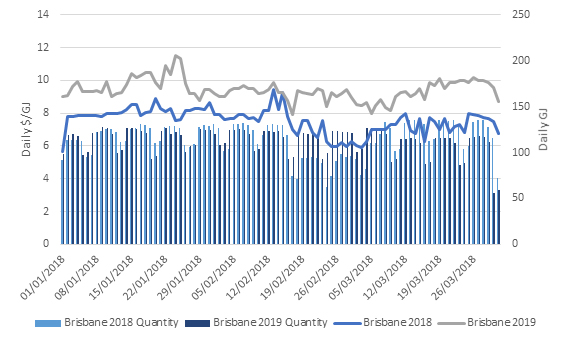
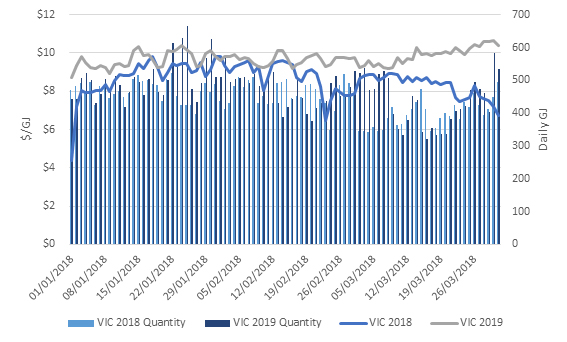
Gas powered generation in Q119 was 4% higher than Q118 with less generation from hydro, black coal and brown coal. There was a material increase in generation from solar and wind resources which was to be expected.

Average prices in the STTM hubs and the VIC gas market all increased in Q119 relative to Q118. Volumes were lower in the STTM markets, whereas the volumes increased through the VIC market. Gas fired generation in VIC averaged 75TJ/day in Q119, which was 23TJ/day higher than Q118. Less generation from brown coal and hydro generators was the primary driver behind this.

Regional analysis

Brisbane

Brisbane STTM gas prices were higher in Q119 relative to Q118. Prices were consistently higher and generally followed a similar pricing trend. Volumes exchanged through the STTM were marginally higher in Q118 relative to Q119.


Sydney

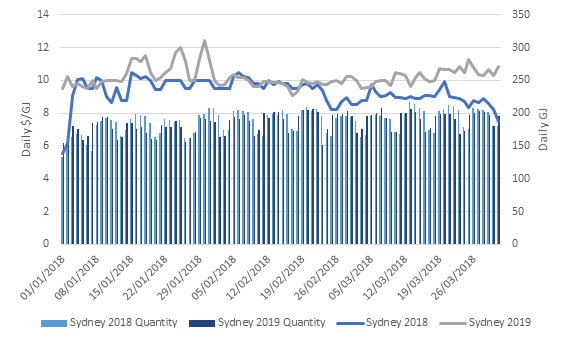
Sydney STTM gas prices were higher in Q119 relative to Q118 with a divergence in prices in the final week of the month. Volumes exchanged through the STTM were very marginally higher in Q118 relative to Q119.


Adelaide

Adelaide STTM gas prices were higher in Q119 relative to Q118. Q119 prices were consistently above that of Q118, with the exception of a few days at the beginning of February. Volumes exchanged through the STTM were very marginally higher in Q118 relative to Q119.


Victoria

VIC gas prices were higher in Q119 relative to Q118 with prices diverging in the final weeks of the quarter. Unlike the STTM markets, there was more volume traded through the VIC market in Q119 relative to that of Q118. On the 24th and 25th of January, there was a spike in gas volumes which was driven by higher demand from the Gas Powered Generators as a result of very high electricity prices.

If you would like to know more about what is happening in the gas market and how your business may be affected, please call Edge on 07 3905 9220.
STATE OF THE ELECTRICITY MARKET – WINTER MARKET OVERVIEW

Nick Clark, Edge Energy Analyst

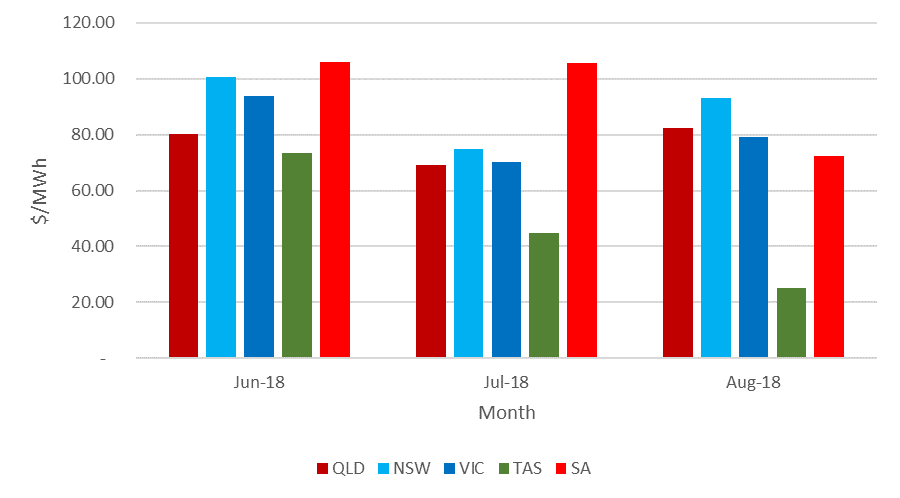
The electricity spot prices were generally higher for the winter period (June to August) than the preceding three months. The largest contributing factors were higher gas prices and increased demand for most of the regions. This excludes Tasmania where average prices fell from $80.26/MWh in autumn to $47.55/MWh in winter. Demand was still higher in the Tasmanian region, however additional rain meant that many of the hydro plants were running, as opposed to spilling water without generating. This put downwards pressure on the local prices.

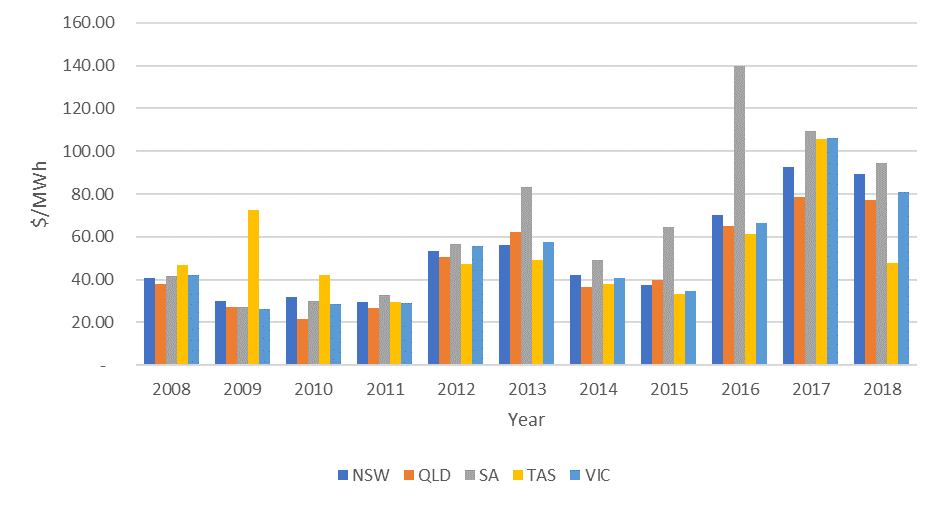
The lower Tasmanian prices didn’t result in lower prices for the rest of the National Electricity Market (NEM). Across all regions, the prices during the 2018 winter were lower than the 2017 winter, however were still very high in a historical context. Looking back across the last 10 winters, the previous two (three for South Australia where Northern Power Station closed in May 2016) look like outliers. In fact, averaging the previous 8 years from 2008 to 2016, prices have been lower for all regions.

Figure 1: Historical prices for winter

It should be noted that prices in both 2012 and 2013 were affected by a carbon tax, which was subsequently repealed in 2014. Since then, there has been a steady price increase in all mainland NEM regions. The prices appear to have plateaued, however not reduced. In Queensland, the Government provided a direction to Stanwell Corporation to adopt strategies to reduce wholesale prices. Since the direction, there have been fewer price spikes (prices above $300/MWh). Although,  the prices outside summer months are not reducing.  Queensland is the only NEM region which had lower demand during winter compared to autumn. Price spikes in June caused by issues on the transmission network and lower availability at the start of winter kept average prices higher.

New South Wales had the same transmission issues as Queensland, and rolling planned outages at coal fired power stations meant that there was little spare base load capacity available. Victoria had high overall prices with few price spikes and was the only NEM region which didn’t have any prices above $350/MWh. Higher demand and gas prices kept overall prices high in the region. With lower availability in New South Wales, Victoria exported an average of 389 MW into the region compared to 57 MW during autumn. South Australia is heavily dependent on gas powered generation when there is insufficient renewable generation to power the state. This makes South Australia vulnerable to higher demand and higher gas prices, both of which were prevalent during winter. Prices were the lowest in three years, however still the highest of any NEM region. There is still a large amount of domestic gas usage in South Australia which means that prices tend to spike during winter. This occurred again in 2018.

For a full report on our gas prices see here.

Figure 2: Average monthly spot prices in the NEM

The market didn’t run completely smoothly during the winter period. On Saturday 25 August 2018, multiple simultaneous lightning strikes on critical infrastructure caused load shedding. The lightning strikes occurred on the border between New South Wales and Queensland causing a loss of the main interconnector between these two regions. At the time, Queensland was supplying New South Wales with generation. The sudden loss of generation from Queensland caused load to be tripped in New South Wales. The loss of frequency also triggered a shutdown of the interconnection between South Australia and Victoria for reasons still being investigated by AEMO. This caused load shedding in Victoria and Tasmania. In total, 800 MW of load was lost in New South Wales, 280 MW in Victoria and 80 MW in Tasmania. This was predominantly industrial load which was reconnected within an hour.

Higher spot prices and concerns over the stability of the grid has caused the forward prices to increase. Snowy Hydro continued to draw down on its dam levels and with a dry outlook, the inflows could be lower than previous years. If Snowy Hydro reduces their output during 2019, spot prices could be even higher than current prices.

We are also seeing a separation between prices again. Though there were increases across all states, these were highest in Victoria ($16.56/MWh) and New South Wales ($15.88/MWh), and lowest in Queensland ($7.38/MWh).

Figure 3: Calendar year 2019 forward contracts

NSW QLD SA VIC
01-Jun-18 68.18 62.53 87.00 74.00
31-Aug-18 84.06 69.91 96.09 90.56

Source: ASX

There continues to be additional generation added to the market, mainly renewable energy. Going forward, it will be the integration of this renewable energy into the market which will ultimately determine if prices will reduce or if a more volatile market will be created. It is certainly unlikely in the near term that spot prices will return to historical levels (where the cost of energy during winter was in the $30s/MWh).

Looking forward

Q119 continues to be a period of concern across the market, as market participants continue to accept higher prices for swaps in the interest of reducing or removing exposure to spot prices. The BOM is forecasting hot and dry temperatures during the period, which are conditions that tend to cause volatile and higher spot prices.

If you would like to discuss the electricity market outlook and potential impact to your electricity portfolio, please contact our Energy Analyst, Nick Clark on 07 3905 9227 or on 1800 EDGE ENERGY.

National Energy Guarantee: it’s over

Nick Clark, Edge Energy Analyst

In late 2017, the Energy Security Board (ESB) developed a scheme to provide investment certainty in the electricity market, which would address Australia’s commitments under the Paris Agreement.

The Coalition had ruled out a carbon tax, other cap-and-trade schemes and virtually any other scheme which had been attempted in the past. This left very few options for the ESB to appropriately address investment certainty in the electricity market. The ESB eventually developed an innovative scheme called the National Energy Guarantee (NEG). The basis of the NEG was essentially a cap-and-trade scheme for environmental certificates and, as a sweetener, it also had a reliability obligation. Essentially, the scheme was linked to contracts with retailers to make it sound like it wasn’t a cap-and-trade scheme. The reliability obligation would force retailers to purchase firm contracts if there was a reliability gap. The additional demand for firm contracts was thought to increase demand for firm generation.

The Australian Labor Party (ALP) was willing to support the NEG on the assumption that they would be able to increase the target for carbon reduction. The states were also largely on-board, on the basis that state-based schemes could continue under the NEG.

The new focus of the Federal Government will be reducing prices in the energy sector.

Prior to the legislation being enacted, Malcolm Turnbull was removed as Prime Minister. Even though Scott Morrison, the succeeding Prime Minister of Australia, had previously been supportive of the NEG, he conceded that it would no longer be acceptable to his party and declared the NEG dead. At the same time, the Australian Competition and Consumer Commission delivered a paper suggesting ways of reducing electricity prices. The new Energy Minister, Angus Taylor, was nicknamed the “Minister for Bringing Prices Down” declaring the new focus for the Federal Government in the energy sector.

Subsequently, the ALP has been quietly arguing for bipartisan support to potentially revisit the NEG in its entirety. Recently, Mr Morrison has been open to the reliability portion of the NEG being resurrected. Mr Morrison has expressed interest in meeting with the states and territories to discuss the possibility of legislating the reliability aspect of the NEG on its own.

While the NEG is still a topic of conversation in parliament, it seems that only the reliability obligation may survive.

As a whole, energy policy is shaping up to be a key differential in the next Federal election. In the meantime, we are seeing renewable projects going ahead across the entire system. Australia is well on track to meet and exceed the current 2020 target of 33,000 GWh of renewable energy across Australia. New investors in Australia are coming to terms with political instability, instead focusing on setting projects up directly with businesses that are considering their own schemes due to the lack of political leadership shown in Parliament.

As we come towards the end of 2018, the outlook is grim for bipartisan support of long-term energy policy; however, we may still have a way forward as consumers start to forge ahead of the political vacuum. The Federal government has warned against businesses forming a technocracy to effectively create laws, however given the failure of the government to provide an alternative, this may be the way that policies will be formed going forward.

Gas Market Update

Nick Clark, Edge Energy Analyst

Domestic gas prices have increased again as Queensland continues to export most domestic gas overseas in the form of Liquefied Natural Gas (LNG). Outages in early 2018 had limited output from the LNG facilities, however all trains are now available.

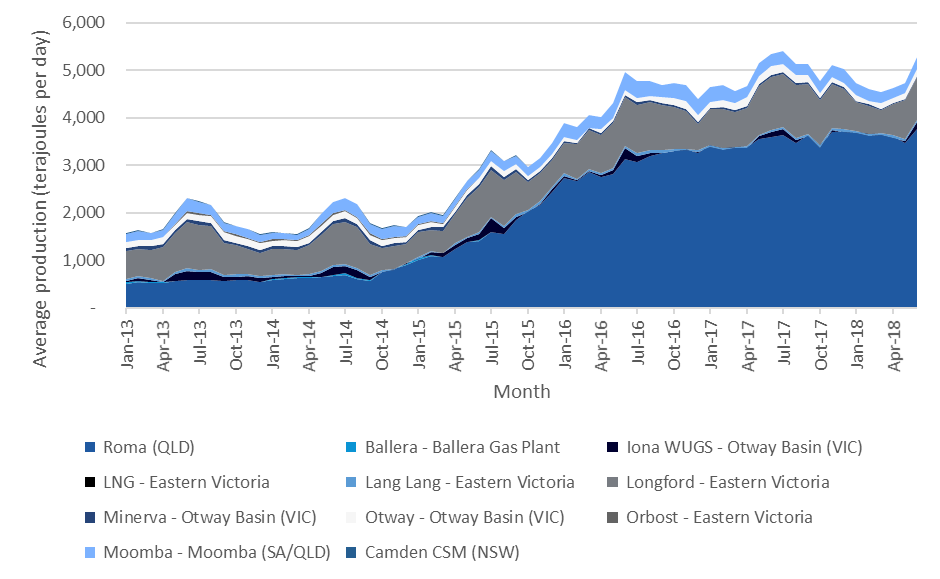
The increase in total gas extracted on the East Coast of Australia is the largest contributor to the increase in gas prices. Before LNG demand, domestic gas could be extracted from cheap resources. However, as more gas is extracted from Roma, Queensland, the price of extraction has increased, which is then passed onto consumers. With the ability to sell gas overseas, producers are also looking to obtain a similar price domestically when the cost of transport has been taken into account (so called netback prices).

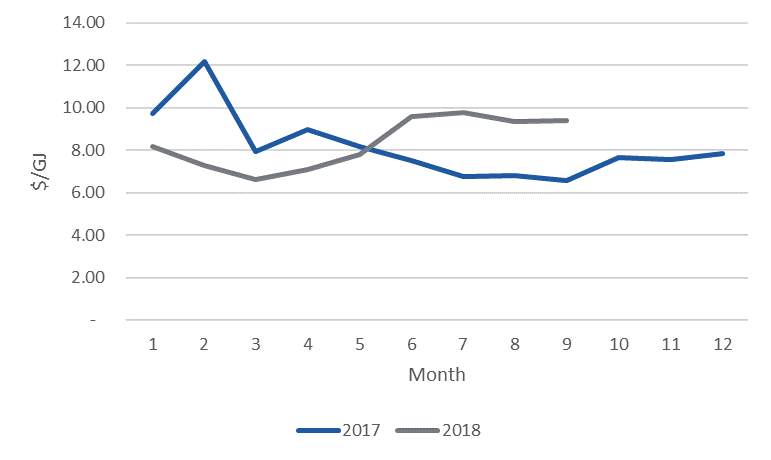
The Australian Energy Regulator (AER) has published the average daily production of gas by production point. This shows the large increase, particularly for Roma. The volume is necessary to justify the very high fixed costs of liquefying and exporting gas.

Source: AER

Overall, prices were lower at the start of 2018 and the Federal Government has been quick to point to its domestic gas policy, whereby producers could be forced to sell gas to domestic consumers ahead of exporting it in the event of a shortage. The inference is that without the domestic gas policy, prices would have been higher. A more obvious driver would be lower export of LNG as one of the export facilities was undergoing planned maintenance. With all facilities now back online, the prices have crept back up and are now higher than the same period in 2017 for all regions.

The Australian Labor Party (ALP) announced that it would look to further strengthen the domestic gas policy by forcing producers to sell locally before exporting if prices were too high. This goes beyond the current policy which requires a shortage for the gas policy to apply. The ALP has not indicated what they consider to be “high prices” for the policy to apply. Additionally, producers are concerned about uncertainty at a time when the gas market needs further investment. The current state of the electricity market should serve as a warning of what happens when there is little investment certainty.

Regional analysis

There are regional differences in the gas prices, which  are mainly based on the different usage of gas. In Queensland, gas is mainly used for LNG export while in Victoria it is predominantly used by residential and commercial customers, particularly for heating. In South Australia and Tasmania, gas is still mainly used for gas powered generation (GPG).

Gas usage in 2017 by sector and region

Residential / commercial Industrial GPG LNG Regional gas consumption (PJ)
Queensland <1% 8% 3% 89% 1,377
New South Wales 37% 42% 21% 0% 130
South Australia 11% 23% 66% 0% 101
Tasmania 5% 33% 62% 0% 15
Victoria 55% 30% 15% 0% 228
Total 10% 14% 10% 66% 1,851

Source: AEMO

Queensland

With lower exports in early 2018, gas prices at the Brisbane hub have been lower than the previous year. Once the outage at an LNG facility was completed in June, prices went back to their elevated levels and have subsequently been sitting above the 2017 prices. In the short term, there is limited opportunity for production of gas to stop, which means that shut downs of facilities will tend to lower prices.

Since the increased LNG production, prices in Queensland have remained steady, consistent with prices in 2017 before the shutdown. There is little gas used outside of LNG in Queensland, therefore making it the main driver.

New South Wales

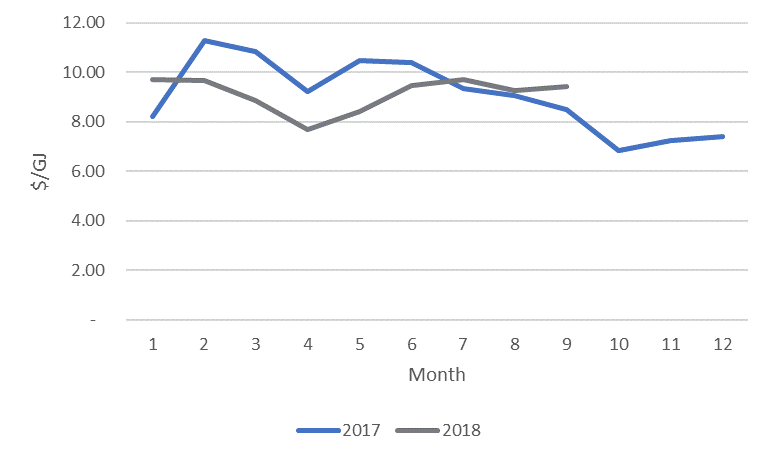
Gas is primarily used in industrial process in New South Wales, providing a flat demand across the year.

From the above graph, it is apparent that prices have been stable across most months. There were slightly lower prices until approximately June 2018 as cheaper gas flowed from Queensland. Prices have started trending up since then.

South Australia

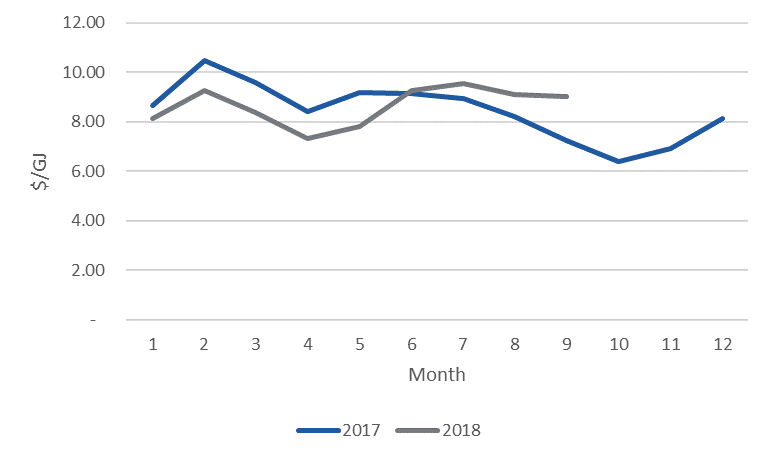
Gas in South Australia is predominately used by gas powered generators. These tend to operate more in both summer and winter when demand for electricity is generally higher.

South Australian gas prices have been modest throughout the year. Higher demand for gas generation in February increased prices overall, however the largest change was again in June when the Queensland LNG facility started exporting again after its outage.

There is still a large swing component of gas demand in South Australia due to residential/commercial demand. Even though this only represents 11% of overall consumption it tends to be very concentrated for a few days per year.

Tasmania / Victoria

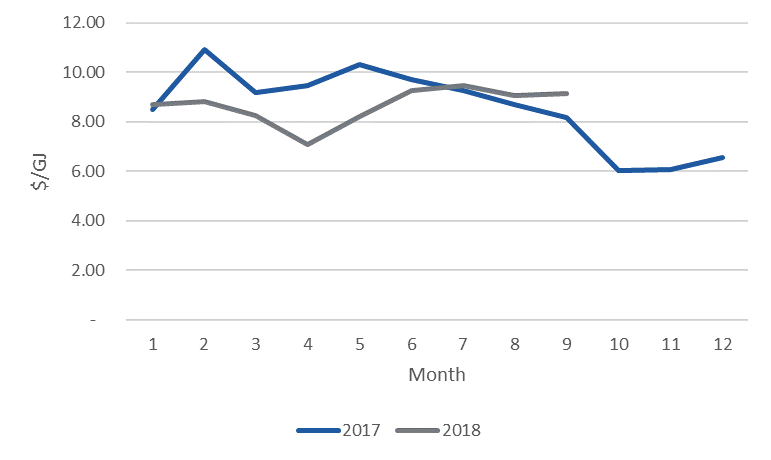
There is no separate Tasmanian gas market with most contracts based on the Victorian prices.

Victoria also has the largest proportion of gas being used by residential/commercial consumers. This creates a large swing in gas demand throughout the day and throughout seasons. Unlike South Australia which uses a lot of gas for power generation, Victoria mainly relies on coal. This means that prices are typically lower in summer and higher in winter.

If you would like to know more about what is happening in the gas market and how your business may be affected, please call Edge on 07 3905 9220 or contact your Edge Portfolio Manager.